

Diploma in Cath Lab Techniques
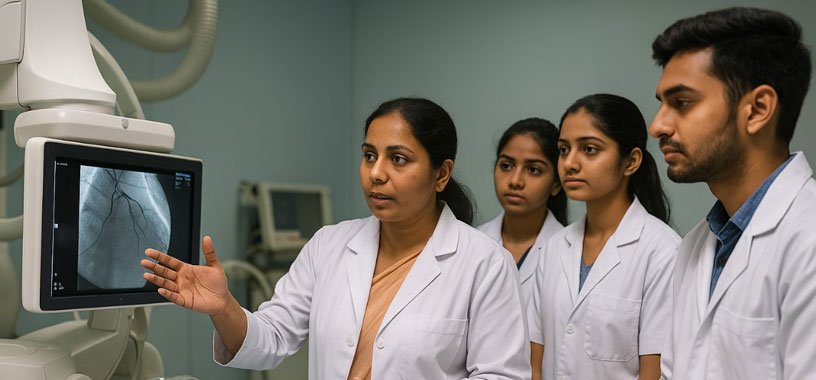
The Diploma in Cath Lab Techniques trains students to assist in cardiac procedures like angiography, stenting, pacemaker implantation, and electrophysiology studies, providing them with essential hands-on skills for working in high-tech cardiac catheterization labs.
Overview
The Diploma in Cath Lab Techniques is a one-year intensive program that trains students in cardiac diagnostic and interventional procedures conducted in a catheterization lab (Cath Lab). It includes theoretical instruction and practical exposure to angiography, echocardiography, electrophysiology, and cardiac emergency response under expert cardiologists.
The program builds strong foundational and practical skills in cardiac catheterization, angiographic techniques, hemodynamic monitoring, and interventional cardiology procedures.
Anatomy & Physiology of the cardiovascular and respiratory systems
Cardiac pharmacology and pathology
Basics of ECG, TMT (Treadmill Test), and Holter Monitoring
Principles of cardiac catheterization and angiography
Understanding congenital and valvular heart diseases
Advanced cardiac procedures: PTCA, BMV, Device Closures, Pacemaker implantations
Patient preparation, catheter handling, sterilization, and safety
Cardiac imaging techniques (Echo, Doppler, Fluoroscopy)
Students gain hands-on expertise in cardiac catheterization procedures—from basic diagnostics to advanced interventions like angioplasty, pacemaker implantation, and valvuloplasty—developing strong clinical skills essential for interventional cardiology support.
Core Curriculum
Semester 1:
Subject
Topics
Anatomy
- Cardiovascular system (Heart, arteries, veins),
- Respiratory system (Trachea, lungs, gas exchange process)
Physiology
- Cardiac cycle
- Hemodynamics
- Cardiac output
- Control of blood vessels
- Cardiovascular reflexes
- Pathological CV responses
- Respiratory physiology
Pharmacology Related to Cardiac Technology
- Anti-anginal agents
- Anti-hypertensive drugs
- Anti-arrhythmic drugs
- Anticoagulants
- Lipid-lowering drugs
Pathology, Microbiology & Clinical Features of Cardiac Diseases (Part 1)
- Valvular Heart Disease
- Coronary Artery Disease
- Systemic Hypertension
- Heart Failure
- Cardiomyopathies
- Pericardial Diseases
Cardiac catheterization Laboratory Basics
- Cardiac catheterization laboratory basics
- Catheter Types, Sterilization, Diagnostic Study Setup
- Pressure Recording, Shunt Detection, Cardiac Output
- Coronary & Ventriculography Basics
Semester 2:
Subject
Topics
Pathology, Microbiology & Clinical Features of Cardiac Diseases
- Arrhythmias
- Pulmonary Hypertension
- Peripheral Vascular Disease
- Congenital Heart Disease (Cyanotic & Acyanotic)
Basic Electrocardiography (ECG)
- Lead Systems, Electrical Axis, Cardiac Activation & Recovery
- Normal Variants, Rhythm & Rate Interpretation
Treadmill Stress Testing & 24-Hour Holter Monitoring
- Exercise Protocols, ST Displacement, Arrhythmia Analysis
- Holter Recorder Setup, Connections & Analysis
Echocardiography
- 2D/M-Mode, Doppler, Transesophageal Echo (TEE)
- Valvular Disease Assessment
- Cardiomyopathies & Congenital Heart Disease
- Pericardial Disease and Mass Detection
Advanced Cardiac Catheterization Techniques
- Aortic, Peripheral & Pediatric Interventions
- Balloon Mitral Valvuloplasty (BMV)
- Coronary Angioplasty (PTCA)
- Contrast Agents & Nephropathy Management
Cardiac Pacing & Electrophysiology
- Temporary & Permanent Pacemakers
- EP Study Tools, Radiofrequency Ablation
- Pacemaker Setup, Monitoring & Follow-up
Eligibility Criteria:
- Annual Intake:
- 2 seat per year
- Eligibility Criteria:
- The candidate must have passed the 10+2 (Higher Secondary School Certificate) examination in the Science stream with a minimum of 50% marks from a recognized board.
- Duration:
- 1 years
Contact Us
Krishna Vishwa Vidyapeeth, Karad Malkapur, Karad (Dist.Satara), Maharashtra, India. PIN - 415539